Diesel Jumps up to ₱12.90/Liter; Donsol Reportedly Cancels Butanding Fest
Quick Take
- Diesel prices spiked by up to ₱12.90 per liter this week after oil companies rolled out another round of hikes nationwide.
- The surge reportedly forced Donsol to cancel its annual Butanding Festival, though Bicol food markets have not yet seen panic buying or price spikes.
- Watch whether transport groups call for fare hikes and how long stable food prices can hold.
One town’s whale shark festival just became the first clear casualty of the latest fuel crisis.
Up to ₱12.90 per liter. That’s how much more diesel costs this week after oil companies rolled out another round of price hikes.
The Immediate Damage
Oil firms imposed the increase without ceremony. Diesel, the fuel that moves nearly everything in the Philippine economy—trucks, buses, fishing boats, farm equipment—now costs up to ₱12.90 more per liter than it did last week. Gasoline prices also climbed, though the diesel spike hits harder because it touches more lives.
The hike arrived with little warning. By midweek, pump attendants across Metro Manila and the provinces were already posting new rate cards. Drivers lined up early Tuesday morning, hoping to fill their tanks before the increase took effect. They were mostly too late.
One Festival, One Choice
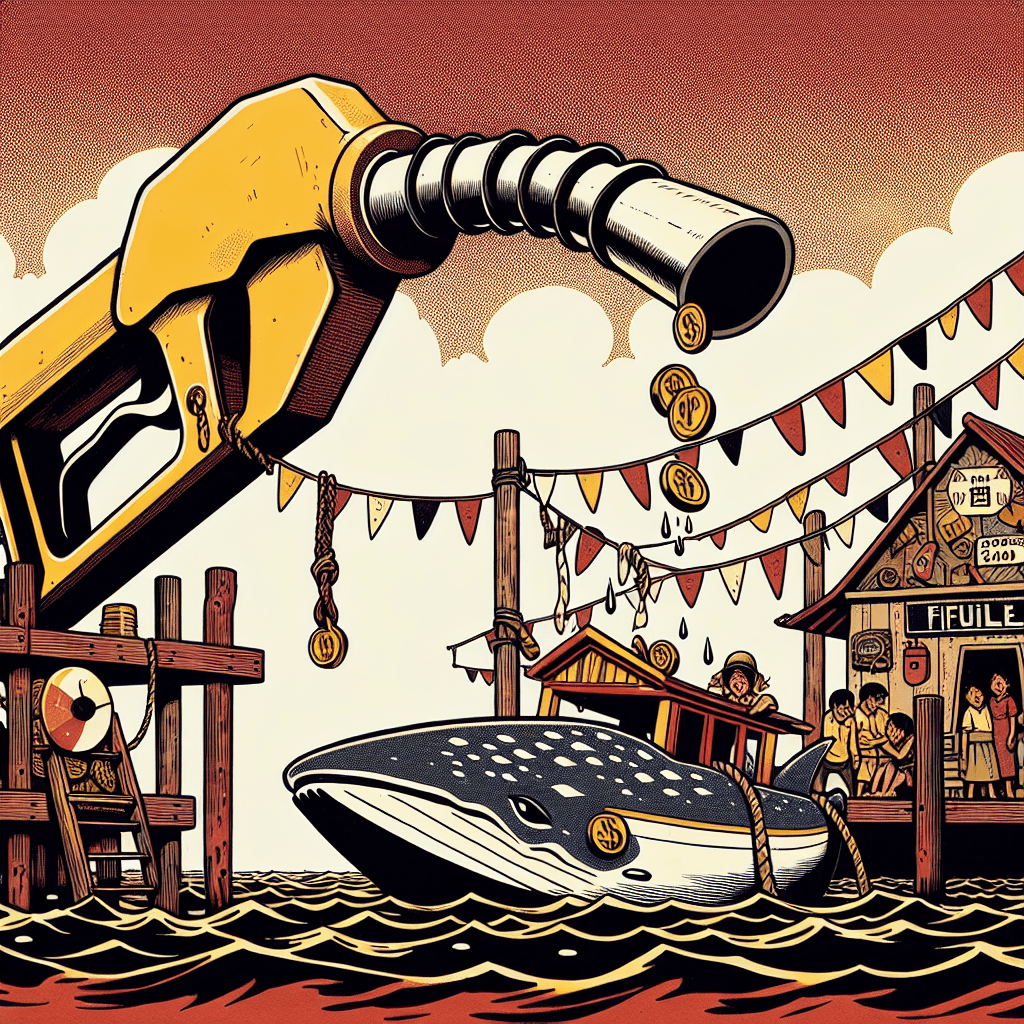
Donsol made the call fast. The Sorsogon town, known for its whale shark encounters, announced it was canceling this year’s Butanding Festival. The reason was blunt: the diesel surge had made the event financially unviable.
It’s a small town festival, not a national emergency. But it signals something larger. Donsol depends on tourism—visitors who fly to Legazpi, ride vans to the coast, and pay boatmen to take them out to swim with butanding. Every part of that chain runs on fuel. When diesel jumps up to ₱12.90 in a single week, the math stops working.
Festival organizers reportedly did not announce a new date. They simply said the event would not proceed. For a town that counts on the annual celebration to draw visitors during peak whale shark season, that’s not a postponement. It’s a loss.
What’s Holding, For Now
The Department of Agriculture reported that food supply remains stable even as oil-price pressures build, and it has intensified price monitoring; rice inventories at the National Food Authority were at about 400,000 metric tons as of March 21, 2026, enough to feed the country for 10 days, according to the DA. That’s the good news.
But “not yet” is doing a lot of work in that sentence. Food prices lag behind fuel costs. Diesel goes up on Tuesday; the tomatoes that traveled on that diesel reach the market on Thursday, priced at the old rate. The increase works its way through the system slowly, then all at once.
Bicol’s food markets are stable today because farmers and traders have not yet passed on their new costs. They will. They have to. A vegetable vendor in Naga who pays more per liter to transport her goods from the farm cannot simply absorb that loss indefinitely. Neither can the fisherman in Donsol whose boat now costs more to fuel for the same catch.
The question is not whether food prices will rise. It’s when, and by how much.
What This Means If You Drive, Ride, or Eat
If you drive: filling a 50-liter tank now costs ₱645 more than last week—more than a full day’s minimum wage in Metro Manila (₱695 under Wage Order No. NCR-26). That extra money is gone before you even pull out of the station.
If you ride: jeepney and bus operators are already calculating whether to ask the LTFRB for another fare hike. They have asked before. They will ask again. Whether the government approves it quickly enough to prevent operators from cutting routes is another matter entirely.
If you eat: your palengke bill has not changed yet. It will. Watch the price of vegetables that travel long distances—Baguio lettuce, Benguet potatoes, anything that moves by truck from farm to market. Those will move first.
And if you live in a town like Donsol, where the local economy depends on events that require fuel to happen—festivals, tours, gatherings that bring outside money in—you are already feeling it. The Butanding Festival is not the last thing that will be canceled this year because the fuel math stopped working.
Editor’s Take
The diesel hike is a national story, but it lands hardest in the provinces. Donsol’s canceled Butanding Festival is a small thing next to global oil markets, yet it shows exactly how fast a price surge turns into lost livelihoods. The Department of Agriculture says food supply is still stable and monitoring has been stepped up. Talagang—for now. But “for now” has a very short shelf life when diesel is up to ₱12.90 more per liter and every kilo of kangkong still has to travel from farm to table. The first domino has already fallen. We’re just waiting for the rest.
Sources
Price Watch: Diesel up P12 per liter as oil firms impose new hikes — Philippine Star
No price spike yet in Bicol food markets amid fuel crisis — DA — Inquirer
Donsol cancels Butanding Festival amid oil price surge — Inquirer
Double-digit fuel hike: Diesel, kerosene prices climb again — Philippine Star
DA chief assures adequate food supply amid oil risks — Department of Agriculture
National Capital Region daily minimum wage rates — National Wages and Productivity Commission