Diesel at ₱90: Gulf tensions now hitting Filipino pockets
Quick Take
- Diesel prices could breach ₱90 per liter next week as Middle East tensions ripple through global oil markets.
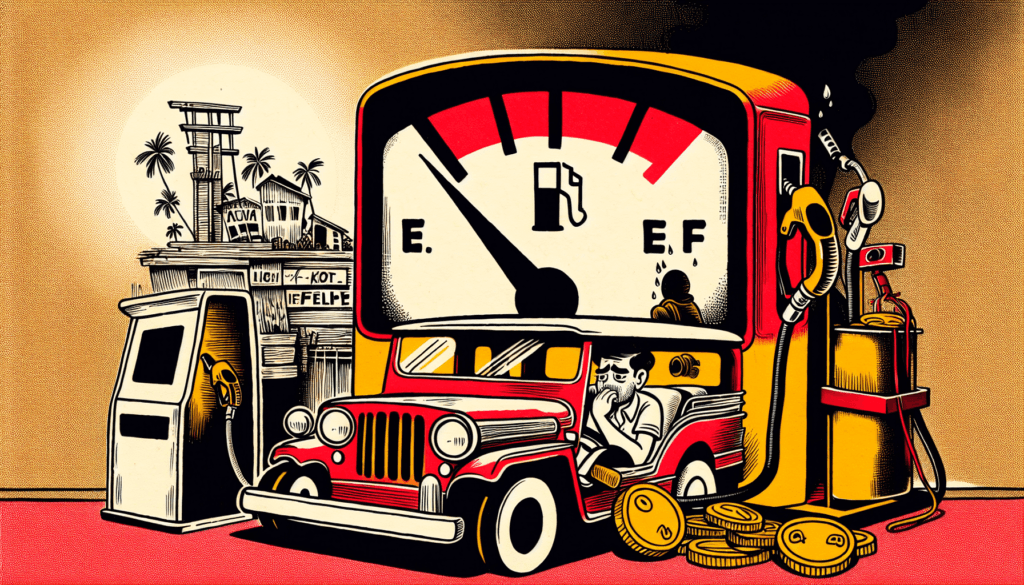
- For jeepney drivers, tricycle operators, and delivery riders already operating on razor-thin margins, this isn’t just expensive — it’s unsustainable.
- Watch whether government subsidies expand beyond pilot cities like Iloilo, or if transport groups are left to absorb the shock alone.
The price spike everyone feared is arriving ahead of schedule.
Fuel retailers are signaling diesel could hit ₱90 per liter as early as next week — a threshold that pushes already strained household budgets into the red.
The number that changes everything
₱90 per liter is not just another incremental hike. For context: a full tank for a provincial jeepney that cost ₱3,500 three years ago now edges toward ₱5,000. Multiply that across daily refills, across thousands of routes nationwide, and you see why transport groups have stopped asking politely.
The trigger this time is external. Escalating conflict in the Gulf region has tightened global oil supply, pushing crude prices upward. When the Singapore benchmark (MOPS) climbs, Philippine pumps follow— usually within days, rarely with warning.
Who decided this, and how it got here
Oil companies don’t set prices in a vacuum. They respond to global benchmarks, import costs, and currency fluctuations. The peso’s recent weakness against the dollar compounds the problem: every barrel costs more in pesos than it did six months ago.
But the structure that allows these shocks to land so hard on ordinary Filipinos? That’s policy. The Oil Deregulation Law of 1998 freed fuel pricing from government control, betting that market competition would protect consumers. A quarter-century later, that bet looks uneven. Prices climb fast when crude spikes. They rarely fall as quickly when it doesn’t.
The Department of Energy can monitor. It can appeal to oil firms for “voluntary restraint.” It cannot cap prices. And so we arrive here: drivers calculating whether the day’s earnings will cover the fuel to earn them.
What this means if you drive for a living
For jeepney and tricycle operators, ₱90 diesel is not an inconvenience — it’s a crisis of arithmetic. Most operate under the boundary systems: drivers pay a fixed daily fee to the vehicle owner, then keep whatever they earn beyond that. When fuel eats deeper into the margin, there’s no cushion. You drive longer, skip meals, or go home at a loss.
Delivery riders face a parallel squeeze. Fuel allowances from app platforms rarely adjust in real time. A ₱20 jump per liter means ₱200 less per week — money that was already spoken for.
Iloilo City has rolled out fuel subsidies for transport workers, a localized buffer that acknowledges the reality on the ground. But Iloilo is one city. The problem is national. And subsidies, however welcome, are short-term patches on a structural wound.
For the rest of us, the math is simpler but no less real. Diesel powers not just jeepneys but delivery trucks, provincial buses, and the entire logistics chain that moves goods from port to palengke. When diesel hits ₱90, rice gets more expensive. Vegetables cost more. The price of getting to work goes up even if you don’t own a vehicle.
Editor’s Take
The ₱90 threshold isn’t just a number — it’s a stress test for a transport system already running on fumes and goodwill. Iloilo’s subsidy is a start, but piecemeal relief across a handful of cities won’t hold when the problem is everywhere at once. The government can’t control global oil markets, true enough. But it can control how hard those shocks land on the people least able to absorb them. Fuel subsidies, fare adjustments that don’t take months to approve, safety nets that activate before drivers go hungry — these aren’t radical ideas. They’re the difference between managing a crisis and pretending it will manage itself. Sa totoo lang, we’ve had enough practice at this to know better by now.
Sources
Diesel may hit P90 per liter next week — Philippine Star
[Vantage Point] The ₱90 per liter oil warning: How Gulf conflict could hit local fuel and power prices — Rappler
Fuel subsidy to help Iloilo City transport workers amid oil price hikes — Inquirer