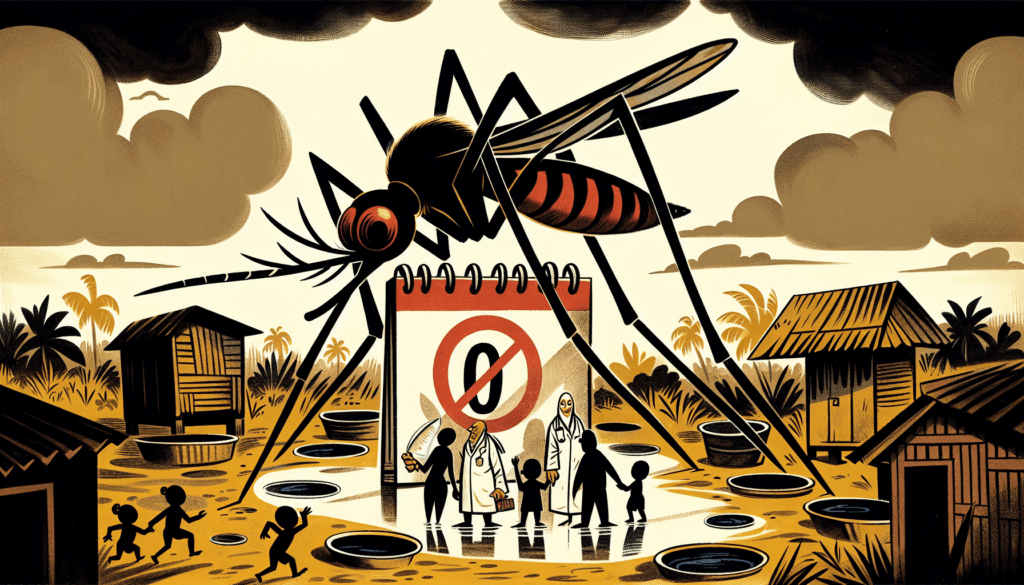
Doctors Want Zero Dengue Deaths by 2030. Can We Do It?
Quick Take
- The Department of Health recorded 14,907 dengue cases as of mid-February, while doctors push for an ambitious goal: zero dengue deaths by 2030.
- This matters because dengue kills Filipinos every rainy season—particularly children in crowded communities—and zero deaths would mean finally breaking a cycle we’ve long accepted as inevitable.
- Watch whether the health system can sustain mosquito control, early detection, and hospital readiness beyond election cycles and budget cuts.
Nearly 15,000 cases already this year—but the goal isn’t fewer. It’s none.
The number sits there like a challenge: 14,907 dengue cases recorded by the Department of Health as of February 14. That’s before the heavy rains hit, before summer ends and the real dengue season begins. And yet doctors are saying something that sounds almost reckless—zero deaths by 2030.
A Target That Sounds Impossible Until You Remember What We’ve Done Before
Zero deaths doesn’t mean zero cases. Dengue will still infect Filipinos; mosquitoes don’t read policy briefs. But the goal is to catch every case early enough, treat it well enough, that no one dies from it. Think of it like this: we still get measles outbreaks, but deaths are rare because we know how to manage them. Dengue, for all its annual predictability, still kills—often because patients arrive at hospitals too late, or because rural health centers lack the IV fluids and trained staff to handle severe cases.
The 2030 target isn’t pulled from thin air. It reflects a quiet shift in how the medical community thinks about dengue. For years, the message was to avoid mosquitoes, clean your surroundings, don’t let water pool. All true, all necessary. But doctors now recognize that prevention alone won’t save the child whose fever spiked overnight, whose parents waited too long because they thought it was just flu, whose barangay health station had no one on duty.
The Gap Between Aspiration and the Realities on the Ground
Here’s what zero deaths by 2030 actually requires: every barangay health worker trained to spot warning signs. Every hospital stocked with enough fluids and platelet monitoring capacity. Every parent knowing that dengue can turn dangerous within hours, not days. And every local government maintaining mosquito control year-round, not just when cases spike and the news cameras arrive.
That’s a tall order in a country where health budgets get slashed, where dengue isn’t dramatic enough to sustain political attention, where the same communities flood every rainy season and breed the same mosquitoes in the same stagnant water. Fourteen thousand cases in February alone tells you the mosquitoes are winning their side of the fight.
But here’s the thing: we’ve done harder things. We’ve successfully contained polio outbreaks, maintaining polio-free status since 2021. Our nation has cut maternal deaths dramatically over two decades. We’ve built a vaccination program that, for all its gaps, reaches millions of children every year. The infrastructure exists. The knowledge exists. What’s missing is the boring, unglamorous work of sustaining it—funding the same programs every year, training the same health workers, checking the same water containers.
What This Means If Your Child Gets a Fever Next Month
If your child spikes a fever during rainy season, don’t wait three days to see if it passes. Dengue’s danger window is narrow. By the time you see the warning signs such as persistent vomiting, bleeding gums, severe abdominal pain—the virus has already done damage. Go to the health center on day two. Insist on a dengue test if the fever won’t break.
For families in Metro Manila, access to hospitals isn’t the issue—it’s knowing when to go. For families in the provinces, the issue is whether the rural health unit has supplies, whether the doctor is in, whether the ambulance has fuel. Eliminating fatalities by 2030 means closing that gap. It means a mother in Samar gets the same quality of care as a mother in Makati. Hindi biro, but it’s doable if the system holds.
If you’re in a flood-prone area, assume your neighborhood is a dengue hotspot. Clean your gutters. Check your water drums. Report abandoned tires and construction sites where water pools. The goal isn’t to eliminate mosquitoes—it’s to reduce them enough that the health system can handle the cases that do occur.
Editor’s Take
Zero dengue deaths by 2030 is the kind of goal that sounds naive until you realize it’s the only honest target. Anything less is just negotiating how many Filipinos we’re willing to lose to a preventable disease. The doctors setting this goal aren’t dreamers—they’re the ones who’ve watched children die in emergency rooms because the referral came too late, because the barangay health worker wasn’t trained, because the local government stopped fogging after the election. They know what’s possible, and they know what we’ve been settling for. The question isn’t whether zero deaths is realistic. The question is whether we care enough to make it so.
If we hit 2030 and dengue still kills Filipinos, it won’t be because the medicine failed—it’ll be because the follow-through did.
Sources
DOH: 14,907 dengue cases recorded as of February 14 — Philippine Star
Doctors’ goal: Zero dengue deaths by year 2030 — Inquirer