La Niña exits early; PH returns to neutral weather
Quick Take
- PAGASA confirms the weak 2025-2026 La Niña has ended, bringing the country back to neutral climate conditions.
- Farmers and communities that adjusted planting schedules and water use can now reassess strategies as weather patterns normalize.
- Watch how this affects rice prices, power rates, and the government’s food security planning through mid-2026.
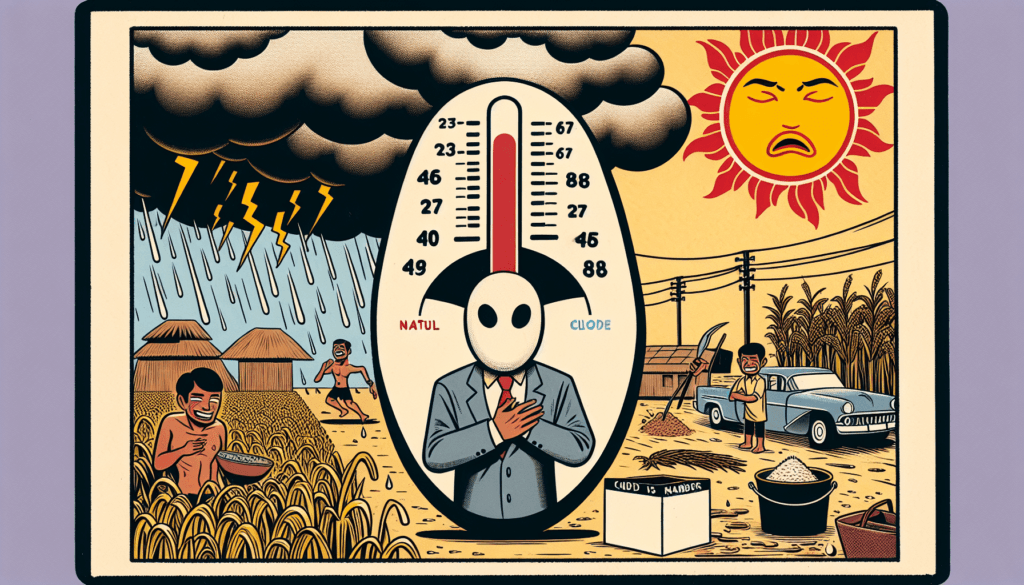
PAGASA says the weak climate event has ended, but the real test is what comes after normal.
The Philippine Atmospheric, Geophysical and Astronomical Services Administration (PAGASA) announced this week that the 2025-2026 La Niña episode has concluded. The country now enters what forecasters call “neutral conditions” — neither the cooler, wetter La Niña nor the hotter, drier El Niño.
What Set This Off
PAGASA’s declaration follows months of monitoring sea surface temperatures across the Pacific. The agency had earlier classified this La Niña as “weak,” meaning its effects on Philippine rainfall and temperature were milder than the episodes Filipinos endured in 2020-2021 and 2010-2011. Those earlier cycles brought flooding to Cagayan Valley, delayed planting seasons in Central Luzon, and, according to reports, pushed palay prices high enough that the government opened the floodgates to rice imports.
This time, the impacts were gentler. Rainfall distribution stayed closer to average. Typhoons arrived on schedule but without the clustering that overwhelms disaster response. Reservoir levels in Angat, Pantabangan, and Magat remained manageable — not ideal, but workable.
The announcement itself is technical. PAGASA bases the call on ocean temperature data, atmospheric pressure readings, and models that track how the Pacific’s warmth moves east to west. When those indicators return to baseline for three consecutive months, the episode is declared over.
Why It Kept Getting Worse
Except it didn’t get worse. And that’s what makes this moment worth examining.
La Niña typically brings more rain, cooler temperatures, and a higher chance of typhoons forming in the Pacific and tracking toward the Philippines. Farmers in Isabela and Nueva Ecija adjust their calendars accordingly. Disaster offices in Eastern Visayas and Bicol pre-position relief goods. Power companies brace for lower electricity demand as temperatures drop.
But a weak La Niña is a different animal. It’s present enough to register on instruments, but not strong enough to override the country’s natural weather variability. What you get is a season that feels… normal. Which sounds like good news until you remember that “normal” in the Philippines still means typhoons, monsoon rains, and the occasional dry spell that stresses crops.
The real risk wasn’t the La Niña itself. It was the planning fatigue. After years of swinging between El Niño droughts and La Niña floods, communities and agencies have learned to prepare for extremes. A weak episode tempts everyone to relax. Farmers plant as usual. Irrigation systems run on autopilot. Relief stockpiles get drawn down for other emergencies.
And then neutral conditions arrive. No safety net, no predictable pattern — just weather.
What This Means for Your Wallet, Your Farm, Your Commute
If you’re a farmer, this is the moment to recalibrate. Neutral conditions don’t mean stable conditions. They mean the Pacific isn’t pushing our weather in any particular direction, so local factors — monsoons, typhoons, soil moisture — matter more. Rice farmers in Central Luzon should watch the Southwest Monsoon closely. Corn growers in Mindanao need to track rainfall week by week, not month by month.
For everyone else, the effects show up at the market and the electric bill. Rice prices tend to stabilize when weather cooperates, and BSP reported in its February 2026 Monetary Policy Report that rice prices continued to decline in January 2026, but any disruption — a late typhoon, a delayed monsoon — can tighten supply quickly. The National Food Authority’s buffer stock is more limited than it used to be after the Rice Tariffication Law curtailed its market intervention role. One bad month can mean ₱50 to ₱60 per kilo becomes ₱65 to ₱70.
Power rates also respond to weather. Cooler La Niña months mean lower air conditioning demand, which helps keep generation costs down. Neutral conditions push temperatures back up, especially heading into summer. Meralco bills also began reflecting the fixed Green Energy Auction Allowance of ₱0.0371 per kWh starting January 2026. Expect bills to inch upward if March and April turn hotter than usual.
The Department of Agriculture has already signaled it will monitor planting and harvest closely. That’s code for “we’re not sure what happens next either.”
Editor’s Take
Neutral sounds safe. It’s not. It’s the absence of a pattern, which means forecasters lose their clearest signal and planners lose their most reliable guide. The weak La Niña gave us a dress rehearsal for normal — and what we learned is that normal still requires vigilance. Farmers can’t relax. Disaster offices can’t stand down. And the rest of us should remember that the price of rice and the cost of electricity are never more than one weather system away from changing. Kung tutuusin, the hardest season to prepare for is the one that looks like it won’t be hard at all. The calm isn’t the reward — it’s the test.
Sources
PAGASA announces end of weak 2025-2026 La Niña — Rappler
ENSO Advisory No. 3: weak La Niña likely to transition to neutral conditions during January-March 2026 — PAGASA
Monetary Policy Report, February 2026 — Bangko Sentral ng Pilipinas
Stripped powers leave NFA ineffective in stabilizing rice market — Department of Agriculture
Green Energy Auction Allowance (GEA-All) FAQs — Meralco