Marcos wants emergency powers as fuel excise cut looms
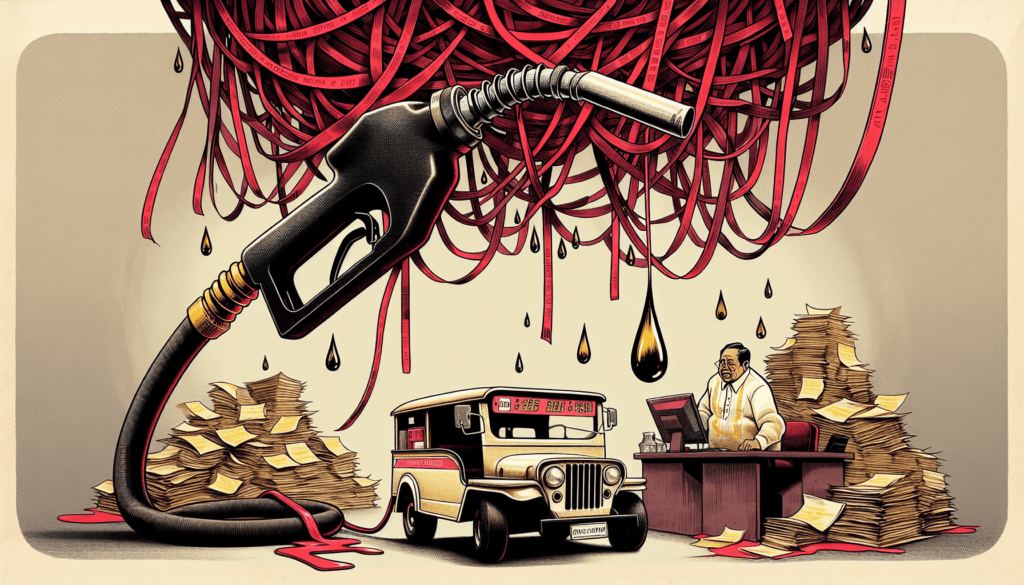
Quick Take
- President Marcos says he’s waiting for Congress to finalize bills that would grant him emergency powers to address rising fuel costs, while lawmakers and the Palace are also pushing to suspend fuel excise taxes.
- For millions of Filipinos already stretched thin by inflation, the question isn’t whether relief will come — it’s whether it will arrive before the next price hike does.
- Watch how quickly Congress moves: emergency powers are politically sensitive, but suspending excise taxes could happen faster if there’s genuine will.
The President is waiting. The question is whether Filipinos can afford to.
Congress is drafting bills that would hand President Ferdinand Marcos Jr. emergency powers to manage fuel price shocks, even as both the Palace and lawmakers push separately to suspend fuel excise taxes. The two tracks are moving in parallel — one slow and politically fraught, the other theoretically faster but still tangled in the usual legislative delays.
What’s Actually on the Table
Emergency powers would let Marcos act without waiting for Congress every time oil prices spike. That includes price controls, fuel subsidies, or direct intervention in supply chains. It’s the kind of authority presidents reach for during crises — and the kind Congress historically hesitates to grant without conditions.
But the excise tax suspension is different. It’s a straightforward cut: remove the ₱6 per liter tax on diesel and the ₱10 per liter tax on gasoline, and pump prices drop by roughly that amount overnight. Rappler’s explainer reportedly lays it out plainly — suspending the tax doesn’t solve the global oil price problem, but it cushions the blow. For a jeepney driver spending ₱3,000 a week on diesel, that’s around ₱720 back in his pocket every month. Hindi biro.
The Palace and Congress both say they want the suspension. What they haven’t said is when.
The Clock That’s Already Running
Here’s what makes the waiting dangerous. Oil prices don’t pause for legislative calendars. Every week Congress debates the fine print, another price hike lands. Republic Act No. 8479, or the Downstream Oil Industry Deregulation Act of 1998, lets oil companies adjust prices based on global markets — which means Filipino pumps reflect Dubai crude prices faster than Congress reflects Filipino needs.
And yet, suspending the excise tax isn’t technically complicated. The Tax Reform for Acceleration and Inclusion Law allows the automatic suspension of excise taxes on fuel when the average Dubai crude oil price reaches $80 per barrel for three consecutive months. Whether the current spike meets that trigger is still a separate question. What’s missing isn’t only legal justification — it’s political urgency.
Emergency powers, meanwhile, carry a different weight. Filipinos remember how those powers were used during the pandemic: some measures worked, others felt like overreach. Congress knows this. Which is why the bills are still being “finalized” while Marcos waits for a version he can sign without backlash.
What This Means If You’re Filling a Tank This Week
If you’re a commuter, you’re paying the full price right now. If you’re a driver, your margin just got thinner. Or if you’re running a small business that moves goods — sari-sari store owner, market vendor, delivery rider — your costs went up and your customers’ budgets went down at the same time.
The excise tax suspension would help immediately. Not completely, but concretely. A liter of diesel at ₱65 becomes about ₱59. A full 50-liter tank of gasoline priced at ₱70 per liter drops from ₱3,500 to about ₱3,000. It’s not relief in the grand sense — it’s relief in the survivable sense.
Emergency powers might help later, depending on how they’re used. Price caps sound good until supply dries up. Subsidies sound better until you ask who gets them and how long they last. The devil, as always, is in the implementation.
What you can do right now is limited. Track your fuel spending if you haven’t already. Carpool if possible. Shift routes if you drive for a living. And watch whether your representatives are actually pushing these bills or just saying they are.
Editor’s Take
Marcos says he’s waiting for Congress. Congress says it’s working on it. Meanwhile, the Department of Energy said 55 show-cause orders had been issued to gas stations over alleged premature fuel price hikes as of March 10, 2026, underscoring how fast pump pressures are already moving. There’s a term for this: political lag. The system is designed to respond but not designed to respond ‘quickly’ — and in a crisis shaped by weekly price swings, slow is expensive. Suspending the excise tax doesn’t require emergency powers. It requires deciding that the urgency Filipinos feel every time they check their wallets is urgent enough for the people who represent them. The waiting, kung tutuusin, is a choice.
Sources
Marcos waits for Congress’ report on bills granting him emergency powers — Inquirer
Congress, Palace move to cut fuel excise tax — Philippine Star
How will suspending fuel excise taxes cushion a big oil price hike? — Rappler
Bam Aquino: Gov’t may suspend excise tax on fuel under TRAIN law amid Middle East conflict — GMA News
Gov’t weighs temporary fuel excise tax cut — DoF — Daily Tribune
Republic Act No. 8479 or the Downstream Oil Industry Deregulation Act of 1998 — Official Gazette
DOE Cracks Down on Erring Gas Stations; 55 Show Cause Orders Issued — Department of Energy