Oil hits 2022 highs as Iran strikes deepen
Quick Take
- Oil prices have climbed to their highest level since 2022 as strikes on Iran intensify, even as markets bet the conflict will wind down soon.
- The Philippines imports nearly all its crude oil, making it acutely vulnerable to Middle East supply shocks that ripple through jeepney fares, electricity bills, and grocery receipts.
- Watch whether Iran retaliates and whether OPEC opens its taps — both will decide if this spike becomes a sustained crisis or a short squeeze.
Markets say the war will end soon. Your fuel bill says otherwise.
The contradiction arrived quietly this week: oil prices surged to levels not seen since 2022, even as financial markets placed confident bets that the Gulf crisis would soon resolve itself.
The Price at the Pump — and Everywhere Else
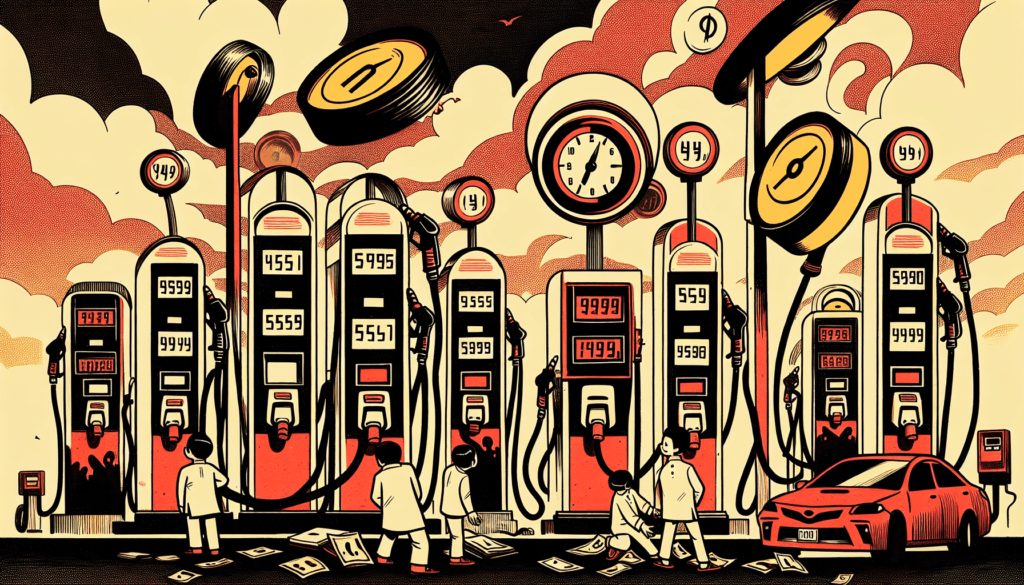
Brent crude briefly crossed $100 per barrel over the weekend, the highest since 2022, while earlier last week it had already climbed to its highest since 2024. West Texas Intermediate also moved sharply higher. The cause, according to reports, was the escalating war involving Iran and the growing risk to oil infrastructure and shipping routes in and around the Gulf. Markets absorbed the news with surprising calm — futures traders are pricing in a de-escalation within weeks, betting that neither Tehran nor its adversaries want a prolonged fight.
But futures traders don’t ride jeepneys in Manila or run sari-sari stores in Cebu.
What 96% Dependence Actually Means
The Philippines imports nearly all its crude oil. When Gulf supply tightens — even briefly — the effects land here with arithmetic precision. Under Republic Act No. 8479, or the Oil Deregulation Law of 1998, domestic pump prices move with global oil prices and other market factors rather than waiting for prior government approval. And the shock is already visible: Department of Energy data cited in BusinessWorld showed pump prices for March 10 ranging from ₱53.10 to ₱73.40 per liter for gasoline and ₱63 to ₱87.44 per liter for diesel.
And it doesn’t stop at gasoline. Higher fuel costs push up electricity rates, since some power plants still use oil-based fuels. Tricycle and jeepney operators absorb the first hit, then pass it along through fare adjustments or, more often, by quietly pocketing the loss until they can’t anymore. Shipping costs rise, which means the canned goods and rice sacks in your neighborhood store cost more to deliver. Farmers pay more to run irrigation pumps. Fishermen pay more to take their boats out.
One supply shock in Kharg Island becomes a thousand small budget crises across the archipelago.
The Bet Everyone’s Making — Except Us
Financial markets are pricing in a short war. They see limited escalation, diplomatic off-ramps, and a return to pre-crisis supply levels by mid-year. That’s why stock indices have barely flinched and why oil futures for later delivery are trading below spot prices — a signal that traders expect the spike to ease.
The problem? The Philippines doesn’t get to wait for later delivery. We pay current prices now, and we pay them in a currency that’s been under pressure against the dollar. Even if crude falls back by mid-year, the damage to household budgets happens in real time, in pesos, this month.
And there’s a deeper risk markets aren’t pricing in. Iran has repeatedly threatened to close the Strait of Hormuz if strikes continue — a narrow waterway through which about one-fifth of global oil supply passes daily. Closing it, even partially, would send prices sharply higher within days. No amount of strategic reserves or OPEC spare capacity could offset that quickly enough to spare countries like ours from the shock.
Kung tutuusin, we’re not just watching a Middle East crisis unfold. We’re watching our grocery budget get written in real time by forces we have no control over.
The Pattern We Keep Living Through
This is the fourth time in two decades that a Gulf crisis has sent Philippine fuel prices spiking: the 2003 Iraq invasion, the 2011 Libyan civil war, the 2019 Saudi Aramco attacks, and now, according to reports, the current Iran war. Each time, the government responds the same way — suspend excise tax collections temporarily, ask oil companies to “absorb” costs voluntarily, and wait for global prices to fall. Each time, ordinary Filipinos adjust their lives around the new math: fewer trips, cheaper meals, delayed purchases.
What never changes is the underlying vulnerability. We remain almost entirely dependent on imported oil, with no strategic reserve large enough to cushion a prolonged disruption and no serious push to diversify energy sources fast enough to matter in the next crisis.
Markets may be betting this war ends soon. But even if they’re right, we’ll have paid the cost of being wrong.
Editor’s Take
The disconnect between market optimism and household reality is the story here. Traders in New York and London are pricing in a quick resolution because that’s what their models suggest. But models don’t ride the MRT or budget ₱200 a day for a family of five. The Philippines has spent two decades hoping the next oil shock will be brief and the one after that won’t come. Neither hope has worked out. Maybe the real question isn’t whether this crisis will end soon — it’s why we keep waiting for crises to end instead of building an economy that can withstand them. Until then, every strike on an Iranian refinery is a strike on your weekly budget, and the market’s confidence is cold comfort when you’re counting pesos at the pump.
Sources
Heaviest day of strikes yet on Iran despite market bets that war will end soon — Rappler
Gulf crisis: How global oil supply disruptions impact the Philippines — Rappler
Oil prices hit highest since 2022 | The wRap — Rappler
Republic Act No. 8479 or the Downstream Oil Industry Deregulation Act of 1998 — Lawphil
Big-time fuel price hikes set as war throttles supply — BusinessWorld
War with Iran chokes flows of oil and natural gas, highlighting energy security risks for Asia — Associated Press