Diesel jumps double digits as April fuel hike looms
Quick Take
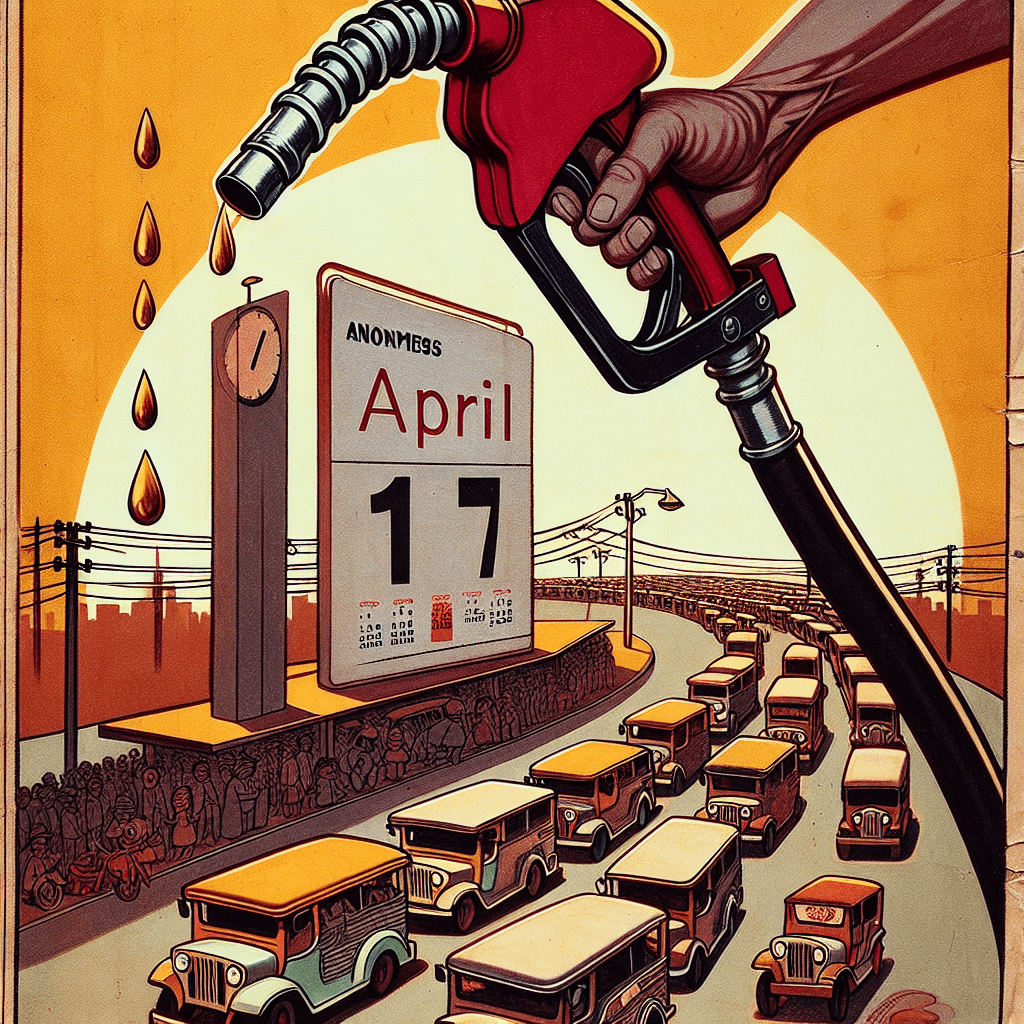
- Oil companies will raise diesel prices by double digits and gasoline prices significantly starting April 7, 2026, prompting motorists in Bukidnon and elsewhere to queue early at pumps.
- Every jeepney fare, delivery charge, and vegetable price will climb again — this is the latest in a prolonged series of fuel hikes, with multiple significant increases throughout March and early April, and the pattern is becoming impossible to ignore.
- Watch whether the government finally intervenes with targeted subsidies or continues to let market forces dictate how much Filipinos pay to move.
Motorists are already lining up. They know what’s coming.
Lines formed outside gas stations in Bukidnon over the weekend, a familiar ritual now for Filipinos who’ve learned to read the calendar of rising prices. Come April 7, diesel prices will surge by double digits per liter, with gasoline and kerosene following close behind. Multiple oil companies confirmed the increases, the latest in a series that has turned fuel budgeting into a monthly gamble for drivers, delivery riders, and anyone whose livelihood depends on combustion.
The Numbers That Sting
Diesel will climb by ₱17 to ₱19.80 per liter… Gasoline will rise by ₱4.90 to ₱5.90 per liter, depending on the company. Kerosene, the fuel of small eateries and provincial households, will also tick upward. For a jeepney driver filling a 60-liter tank, that’s an additional ₱1,020 to ₱1,188 per fill-up — money that has to come from somewhere, and usually comes from passengers or the driver’s own pocket.
This is the latest in a series of significant price adjustments in recent weeks. Each one arrives with the same explanation: global crude prices, refinery costs, exchange rates. And each one lands the same way: heavier tricycle fares in Cavite, pricier vegetables in Baguio, tighter margins for everyone in between.
What Happens When Moving Gets More Expensive
Transport costs don’t stay contained. They radiate outward like heat from asphalt. When diesel climbs, so does the price of tomatoes trucked from Benguet, fish hauled from Navotas, rice distributed from warehouses in Bulacan. Delivery riders renegotiate their mental math about which orders are worth taking. Provincial bus operators quietly adjust their fuel surcharges, a line item passengers have grown wearily accustomed to seeing.
Jeepney drivers face the sharpest edge. Many operate on such thin margins that a ₱17–20 diesel hike can mean the difference between breaking even and going home at a loss. The boundary system — where drivers pay a fixed amount to operators and keep the rest — turns every fuel increase into a pay cut. Some will absorb it. Others will push for fare hikes, which then require government approval, which then becomes another round of negotiations that takes weeks while the fuel is already burning.
For households, it’s death by a thousand cuts. The pamasahe to work goes up. The delivery fee on the balikbayan box goes up. The cost of the pandesal delivered to the sari-sari store goes up because the bakery’s delivery van now costs more to run. None of these increases are dramatic on their own. Together, they reshape what a family can afford in a month.
The Pattern Nobody Wants to Name
Here’s what keeps repeating: global oil prices fluctuate, but Filipino pump prices only seem to move in one direction with any speed.
Critics often point out that pump prices tend to rise quickly when global crude increases, while rollbacks when crude prices fall are sometimes slower and more modest. The asymmetry is not lost on anyone who fills a tank regularly. The government has tools. Subsidies for public transport operators. Temporary tax relief. Strategic releases from reserves, according to reports. But these are deployed sparingly, often after the damage is already done. The political calculus seems to favor waiting until the noise gets loud enough, then offering partial relief that quiets things down without addressing the underlying volatility.
Meanwhile, the push toward jeepney modernization continues, with the promise that newer, more fuel-efficient vehicles will insulate drivers from exactly this kind of shock. But modernization requires capital that most drivers don’t have, and loans that will outlast several more fuel cycles; the LTFRB says government financing support is available through Land Bank of the Philippines and the Development Bank of the Philippines. The logic is sound in theory. In practice, it’s a long-term solution to an immediate crisis, and crises don’t wait.
Editor’s Take
Three months, three hikes, and the same script every time. Oil companies announce, motorists scramble, households adjust, and the cycle resets. What’s missing is any sense that someone is steering this, rather than just narrating it after the fact. Fuel price volatility is a global reality, fine — but how Filipinos absorb that volatility is a policy choice. Right now, the choice seems to be: let them absorb it alone. That leaves many Filipinos feeling they are bearing the full brunt of global volatility with limited immediate relief.
Sources
More oil firms hike prices, with double-digit jump for diesel — Philippine Star
Pump prices to surge anew on week of April 7, 2026 — Rappler
Motorists queue ahead of fuel price hike in Bukidnon — Inquirer
71 gas stations flagged for overpricing, early hikes — Philippine Star
Fuel Subsidy Program — LTFRB
PUV Modernization Program — LTFRB