Kanlaon eruption halts classes for 233,000 Negros students
Quick Take
- Kanlaon Volcano’s latest eruption has disrupted schooling for 233,000 students across Negros as ashfall blankets the island.
- This is the third major eruption this school year — a pattern that raises hard questions about disaster preparedness in chronically affected communities.
- Watch whether DepEd extends the school calendar again, and how local governments plan for recurring volcanic activity that now feels less like emergency and more like routine.
Ashfall from the volcano’s latest blast forces another round of suspensions — but repetition doesn’t make it easier.
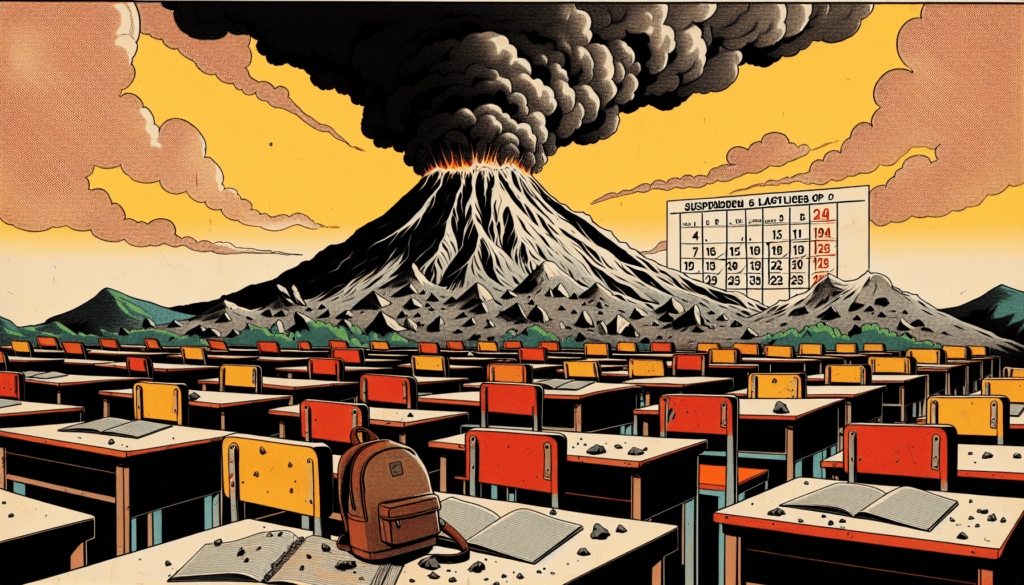
The ash came down like fine gray snow, settling on galvanized roofs, clogging gutters, turning laundry stiff on clotheslines. For 233,000 learners across Negros, it also meant another round of suspended classes, another week of modules crammed into already-packed schedules, another reminder that the mountain decides the calendar now.
When the volcano keeps its own schedule
Kanlaon’s latest eruption blanketed communities across Negros with ashfall thick enough to halt daily life. The Department of Education confirmed that hundreds of thousands of students from elementary to senior high would stay home as cleanup operations began and air quality remained unsafe. This isn’t the first time this school year. Kanlaon has erupted multiple times since classes resumed, each blast forcing the same scramble: suspend, wait, assess, resume, repeat.
The volcano, one of the most active in the Philippines, sits at the boundary of Negros Occidental and Negros Oriental. Its eruptions are not rare, but their frequency this academic year has turned what used to be treated as crisis into something closer to chronic condition. Teachers adjust lesson plans on the fly. Parents juggle work and childcare. Students lose momentum, then try to catch up, then lose it again.
The cost of living under a restless mountain
What doesn’t show up in the DepEd count is the economic undertow. When classes stop, parents who work daily — market vendors, tricycle drivers, construction laborers — face an impossible choice: stay home and lose income or leave children unsupervised while ash still hangs in the air. Hindi biro, especially for families already stretched thin.
There’s also the question no one wants to ask out loud: at what point does “temporary suspension” become a structural problem? The school calendar has already been extended before to make up for lost days. But you can’t simply add weeks to the end of the year without consequences — summer jobs for older students get delayed, family plans upended, and the next school year starts late, compressing everything again.
Meanwhile, in Pampanga, a separate story offered quiet contrast. The DENR announced that a recent fire had spared the Mt. Arayat protected landscape. Good news, certainly. But it also highlighted the uneven attention paid to environmental threats: fires make headlines when they’re avoided, but volcanic ashfall affecting a quarter-million students becomes routine enough that it barely registers beyond the region.
What This Means If Your Child’s School Just Closed Again
If your family is in the affected areas, expect at least another week of closures, possibly longer depending on ashfall thickness and air quality readings. Stock up on N95 masks if you can — the cheaper cloth ones don’t filter fine ash particles effectively. For children with asthma or other respiratory conditions, keep them indoors even after classes resume; ash lingers in the air longer than it seems.
For parents working from home or with flexible schedules, this is manageable. For everyone else — the majority — it’s another week of lost wages or scrambling for childcare. If you’re an OFW sending remittances, expect calls asking for extra help this month. Your family back home isn’t exaggerating the need.
Teachers: don’t expect the curriculum to magically compress itself. Prioritize core competencies, let go of the rest. Students will remember your patience longer than they’ll remember Chapter 12.
Editor’s Take
We’ve normalized something that shouldn’t be normal. A quarter-million students losing class time — again — should provoke more than a press release and a suspension order. It should provoke a real conversation about what it means to build schools, lives, and futures in the shadow of an active volcano. Disaster preparedness in the Philippines still treats every eruption like a surprise, even when the mountain has been telling us for months that it’s restless. We’ve gotten good at suspending classes. We haven’t gotten good at planning for a reality where the suspensions keep coming. At some point, adaptation isn’t resilience — it’s just acceptance that some children’s education will always be interrupted, and we’ve decided that’s tolerable.
The ash will settle, classes will resume, and we’ll call it recovery until the next time.
Sources
DepEd: Kanlaon’s latest eruption affects 233,000 learners — Inquirer
Ashfall from Kanlaon blast blankets Negros — Inquirer
DENR: Fire spares Mt. Arayat protected landscape — Inquirer