Bakit Ang Pahinga Ay Hindi Kasalanan
The group chat has been quiet all morning. Your phone sits face-down on the table, no work emails lighting up the screen, no urgent messages from the boss. It’s Sunday, 11 a.m., and you’re still in your house clothes—but instead of feeling relaxed, there’s that familiar knot in your chest. The one that whispers: Dapat may ginagawa ka na. Dapat productive ka.
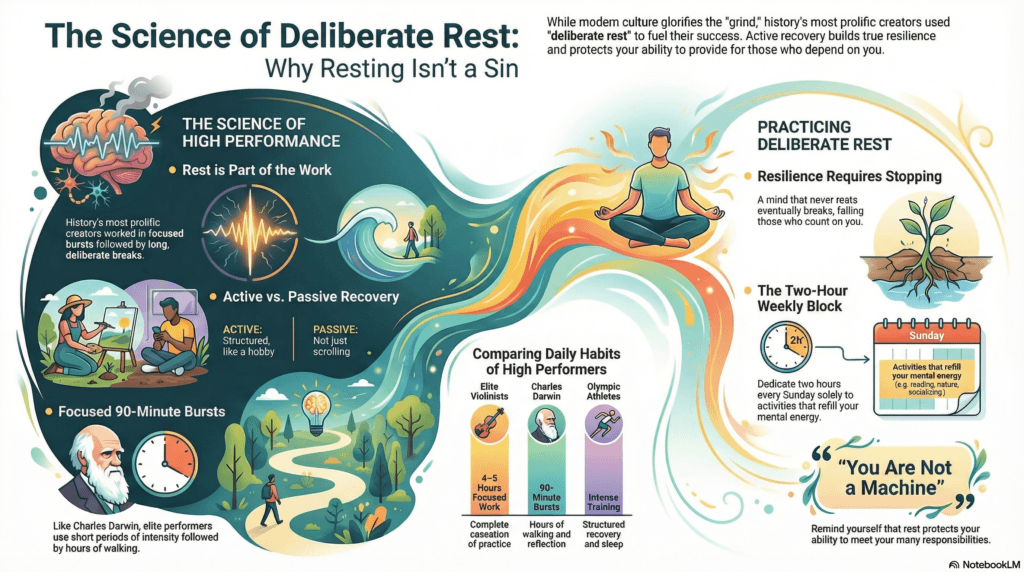
In Rest: Why You Get More Done When Your Work Less, researcher Alex Soojung-Kim Pang examines the lives of history’s most prolific creators—Charles Darwin, Stephen King, even Olympic athletes—and finds something unexpected. The most productive people weren’t working more hours than everyone else. They were resting more deliberately. Darwin worked in focused bursts of 90 minutes, then walked for hours. Elite violinists practiced intensely for 4-5 hours, then stopped completely. The pattern held across fields: rest wasn’t the absence of work. It was part of the work itself.
Pang calls this “deliberate rest”—rest that’s active, structured, and guilt-free. Not scrolling through your phone until your eyes hurt. Not collapsing in exhaustion. But genuine recovery: a walk, a hobby, time with people who don’t need anything from you. The kind of rest that actually restores you.
But here’s what makes this hard for us. We live in a culture that treats busyness like a virtue. “Grind now, rest later” isn’t just a motivational quote—it’s the operating system. You’re juggling a full-time job, a side hustle to cover the rising bills, maybe helping your parents or sending money to a sibling still in school. When every peso counts and every hour feels borrowed, rest feels like a luxury you haven’t earned yet. Worse, it feels like giving up on everyone counting on you.
And on Sundays especially, the pressure doubles. It’s the only day you have to catch up—laundry, groceries, that government appointment you’ve been postponing. Rest becomes another task you can’t afford to prioritize. So you push through, telling yourself you’ll rest when things slow down. Except things never slow down.
But resilience doesn’t come from never stopping. It comes from knowing when to stop. A phone that never charges eventually dies. A mind that never rests eventually breaks. And when you break, everyone who depends on you loses too. That’s not resilience. That’s just running on fumes and calling it dedication.
Here’s what deliberate rest looks like in real life: Block two hours this Sunday—not for errands, not for side hustle work—for something that refills you. A walk around the neighborhood. Cooking a meal slowly, not because you have to but because you want to. Sitting with a book or a friend without checking the time. And when the guilt creeps in—because it will—remind yourself that rest isn’t stealing time from your responsibilities. It’s protecting your ability to meet them.
You’re not a machine. You’re a person. And people need more than productivity to survive.
A BantayDailyPH Daily Dose editorial.