Kapampangan dictionary now PH’s thickest book; Leyte reefs cleared
Quick Take
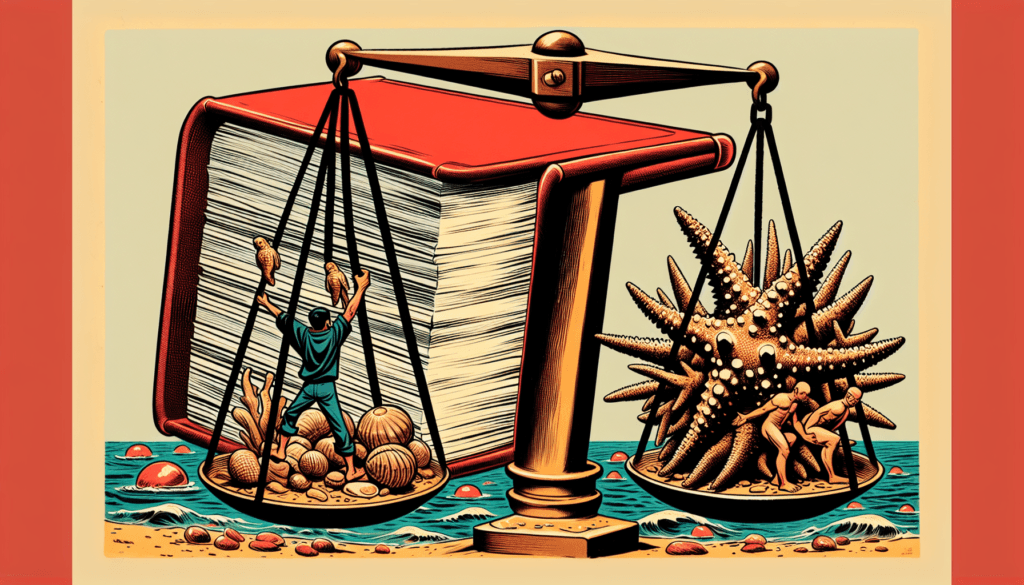
- A Kapampangan dictionary has become the country’s physically thickest book, while volunteers in Leyte cleared invasive crown-of-thorns starfish threatening coral reefs.
- Both stories show Filipinos protecting what’s fragile — language on one island, marine life on another — through patient, unglamorous work.
- Watch whether institutional support follows the initial effort, or whether preservation remains a volunteer burden.
Two preservation efforts—one for words, one for coral—show the quiet work of keeping things alive.
The country’s thickest book is not a legal code or a medical textbook. It’s a Kapampangan dictionary.
What got preserved this week
In Pampanga, a dictionary of the Kapampangan language has earned the distinction of being the Philippines’ physically thickest book—a record that matters less for its novelty than for what it represents. Dictionaries are time capsules. They’re arguments against forgetting. And in a country where regional languages lose ground to Tagalog and English with every generation, thickness is a form of defiance.
Meanwhile, off the coast of Leyte, volunteers cleared crown-of-thorns starfish from local reefs. These starfish—spiny, voracious, and prone to population explosions—devour coral faster than it can regenerate. Left unchecked, they turn vibrant reefs into underwater graveyards. The cleanup was manual, unglamorous, and effective.
Both efforts share a rhythm: slow, deliberate, and largely invisible until someone bothers to count.
Why preservation is always harder than it looks
Kapampangan is spoken by roughly 2.5 million people, mostly in Central Luzon. That sounds substantial until you realize it’s less than 3% of the national population. The language has produced poets, playwrights, and an entire literary tradition—but it competes daily with the convenience of Tagalog and the prestige of English. A thick dictionary won’t reverse that tide, but it does something else: it makes the language harder to erase by accident.
Coral reefs face a similar math problem. The crown-of-thorns starfish is native to the Indo-Pacific, but warming waters and nutrient runoff have turned it into a plague. One starfish can consume up to 10 square meters of coral per year. Multiply that across an outbreak, and you lose entire ecosystems. Leyte’s reefs support local fisheries, tourism, and coastal protection—yet the work of clearing starfish falls mostly to volunteers and small environmental groups, not government programs with steady funding.
Preservation, it turns out, is rarely a priority until something is already half-gone.
What this means if you care about either
If you speak Kapampangan—or if your lolo did, and you’ve been meaning to learn—this dictionary is now the most comprehensive record of the language in print. It’s a tool, yes, but also a statement: the language is still here, still worth documenting in full. For educators, researchers, and families trying to pass the language down, it’s a reference that didn’t exist at this scale before.
If you live near a reef, fish from one, or depend on coastal tourism, the Leyte cleanup is a reminder that marine ecosystems don’t recover on their own. Crown-of-thorns outbreaks are getting more frequent, and manual removal is one of the few interventions that works without harming the reef itself. But it’s labor-intensive. The volunteers who did this work deserve more than a headline—they deserve a model that scales.
Both stories ask the same uncomfortable question: who is responsible for keeping fragile things alive?
Editor’s Take
Preservation is not glamorous. It doesn’t ribbon-cut well. It requires people who care enough to do tedious work—compiling words, pulling starfish off rocks—without waiting for applause or budget allocations. The Kapampangan dictionary and the Leyte reef cleanup are both acts of maintenance, not innovation. And maintenance, sa totoo lang, is what keeps a country from losing itself one small piece at a time. We celebrate what’s new, but we survive on what we bother to keep.
Sources
Kapampangan dictionary is country’s ‘thickest book’ — Inquirer
Crown-of-thorns starfish cleared from Leyte reefs — Inquirer