Bulusan stirs, whale finds its way home
Quick Take
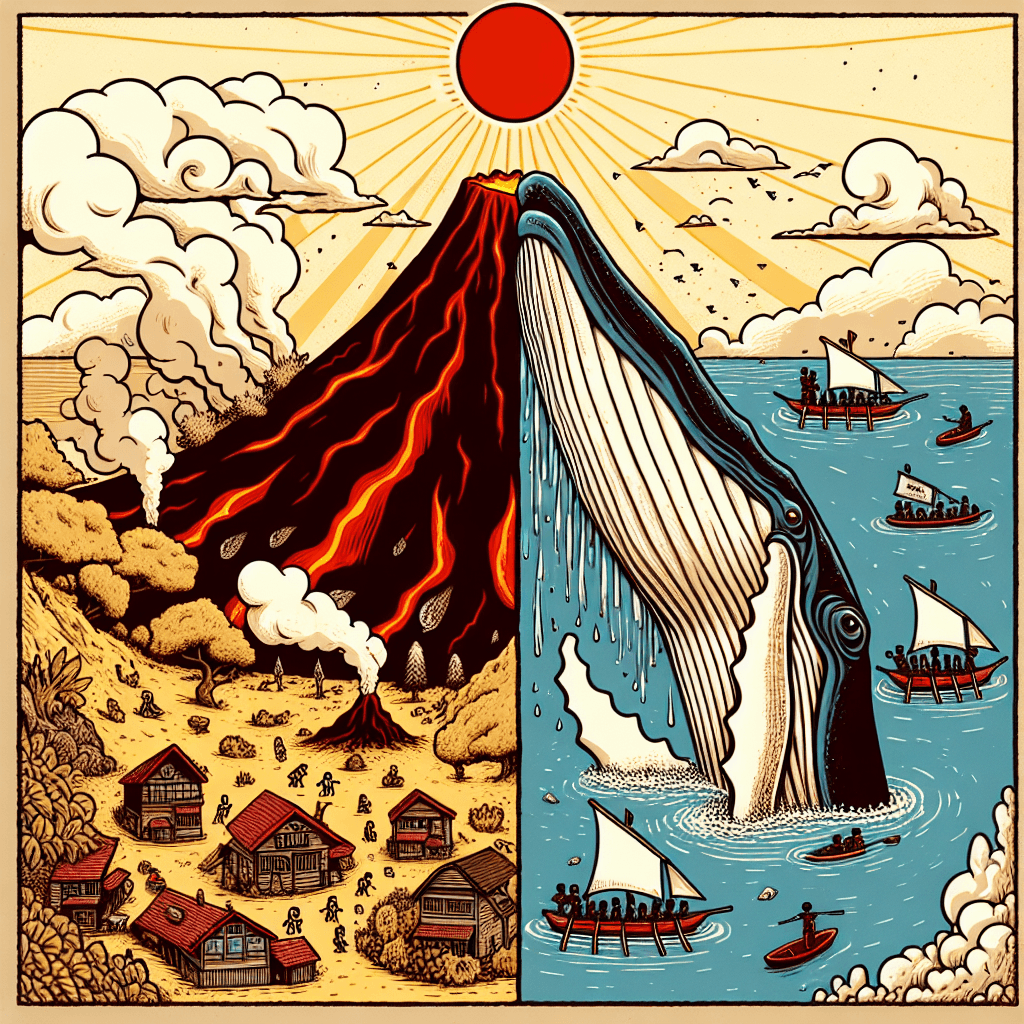
- Bulusan Volcano in Sorsogon was raised to Alert Level 1 after showing signs of unrest, while a sperm whale reportedly stranded in Sultan Kudarat’s shallow waters was successfully guided back to sea.
- Both events remind coastal and rural Filipinos that living alongside nature means staying alert — not alarmed, but ready.
- Watch for PHIVOLCS updates on Bulusan and whether marine strandings increase this season.
Two reminders this week that nature doesn’t follow our schedules.
A volcano wakes up in Sorsogon. A whale loses its way in Sultan Kudarat. Neither story made national headlines for long, but both say something about the country we live in — and the attention we owe the ground beneath us and the waters around us.
When the mountain speaks
PHIVOLCS raised Bulusan Volcano to Alert Level 1 this week after detecting increased seismic activity, slight inflation of the volcano’s edifice, and subtle changes in its crater. For those unfamiliar with the scale, Alert Level 1 means the volcano is showing signs of unrest — not an eruption, not imminent danger, but a shift from its baseline quiet. It’s the equivalent of a neighbor turning on their porch light at 3 a.m. You notice. You don’t panic. But you pay attention.
Bulusan, one of the most active volcanoes in the country, has a history of sudden steam-driven eruptions. The last significant activity was in April 2025, when it erupted and sent ash plumes over nearby towns and prompted evacuations. This time, PHIVOLCS has advised communities within the four-kilometer Permanent Danger Zone to stay alert and avoid the summit area. No evacuations yet. Just vigilance.
For the roughly 150,000 people living in Bulusan’s shadow — farmers in Juban, Irosin, and Casiguran — this is not new. They know the rhythm of the mountain. They’ve memorized the alert levels the way Manila commuters memorize MRT delays. What changes now is the frequency of checking: radios stay on, barangay group chats stay active, and go-bags stay near the door.
When the ocean sends someone back
Meanwhile, in Barangay Taguisa, Lebak, Sultan Kudarat, fisherfolk reportedly spotted a sperm whale struggling in shallow coastal waters. The whale, disoriented and unable to navigate back to deeper sea, risked stranding completely. Local responders, together with the Bureau of Fisheries and Aquatic Resources (BFAR) and the Philippine Coast Guard, reportedly spent hours guiding the animal back toward open water. By late afternoon, the whale had reportedly returned to the deep.
Sperm whales are deep-diving creatures, built for the abyss. They hunt squid thousands of feet below the surface and rarely venture into shallow bays. When they do, it’s usually a sign of disorientation — caused by illness, sonar interference, or changes in ocean currents. The fact that this one made it back is rare. Most strandings end differently.
While marine strandings in the Philippines are not uncommon, successful returns to open water are less frequent—making this outcome notable, even if not widely reported. Strandings are not common, but they’re not unheard of either. What made this one different was the response: quick, coordinated, and grounded in the knowledge that the whale’s best chance was guidance, not intervention. No one tried to drag it. They gave it space and direction.
What both stories ask of us
These two events — one geological, one marine — share a thread. Both required communities to respond not with panic, but with practiced awareness. The people near Bulusan didn’t flee at the first mention of Alert Level 1. The fisherfolk in Sultan Kudarat didn’t treat the whale as spectacle. In both cases, locals understood the situation better than outsiders might have.
That kind of literacy — knowing when to act and when to wait — doesn’t come from government advisories alone. It comes from living close enough to nature that you learn its tells. Kung tutuusin, that’s the real infrastructure: not just the monitoring equipment or the rescue boats, but the shared knowledge passed down through generations who’ve watched the same mountain, fished the same waters, and survived by paying attention.
For Filipinos elsewhere — in cities, abroad, far from volcanoes and coastlines — these stories might feel distant. But they’re not. They’re about the same thing we all navigate: uncertainty, and how we prepare for what we can’t fully predict. Whether it’s a restless volcano, a lost whale, or the next typhoon season, the question is always the same: are we watching?
And maybe that’s what both stories really ask. Not whether we can control nature — we can’t — but whether we’re still listening when it speaks.
Sources
Sorsogon’s Bulusan Volcano raised to Alert Level 1 — Rappler
Sperm whale guided back to deeper waters in Sultan Kudarat — Philippine Star
DILG to LCEs: Prohibit entry into 4-kilometer danger zone of Bulusan Volcano — Philippine Information Agency
Bulusan Volcano erupts, raised to Alert Level 1 — Rappler
The Countryside in Figures: Sultan Kudarat Province, 2022 Edition — Philippine Statistics Authority
Sperm whale rescued, released in Misamis Oriental — GMA Regional TV