Fuel runs dry at pumps despite Marcos assurance
Quick Take
- Several gas stations in parts of the Philippines have reportedly shut down due to limited fuel supply, even as President Marcos assures the public that oil inventories can last about 50 to 60 days from early March 2026.
- The closures hit hardest in provinces where fuel alternatives are scarce, forcing jeepney drivers and delivery workers to scramble for operating capital while Asia’s broader energy shock drives up costs across the region.
- Watch whether the roughly 50- to 60-day buffer holds — and what happens to pump prices as regional demand collides with dwindling stocks.
The President says supply lasts for weeks. Some stations have already closed.
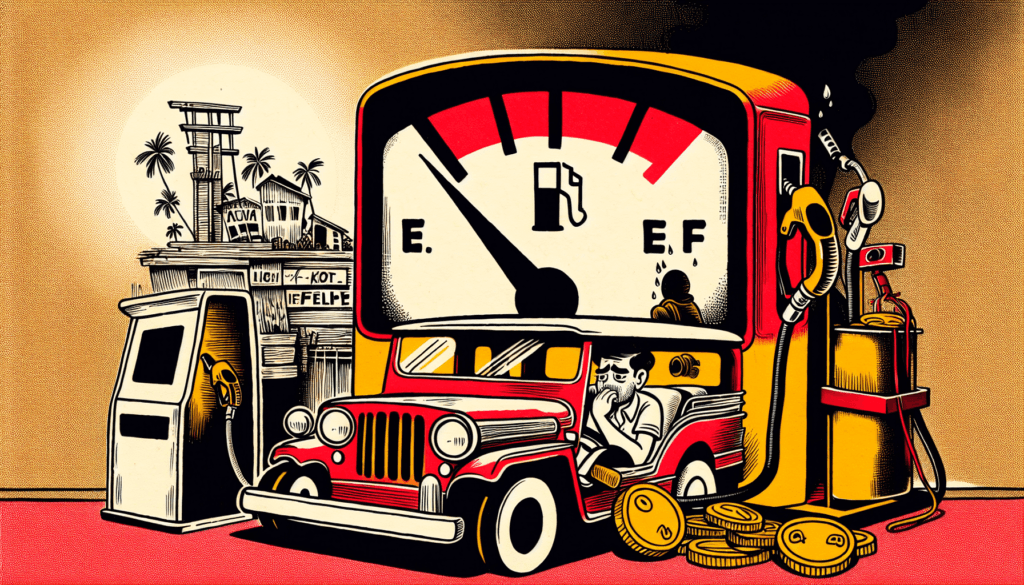
Gas stations have begun shuttering across several provinces — not necessarily because of panic or hoarding, but because fuel deliveries in some areas appear to be falling short.
What Set This Off
The closures started quietly. A handful of independent stations in Visayas and Mindanao put up “No Gas” signs in early March. Then a few more. By mid-March, the pattern was becoming harder to ignore: fuel deliveries were falling short, and smaller operators were running their tanks to empty. The Department of Energy has yet to release official figures on how many stations have been affected, but reports from Davao City and other areas confirm the disruptions are real and spreading.
President Marcos addressed the issue directly, assuring the public in early March that the Philippines had oil inventories sufficient for about 50 to 60 days, not specifically until June 30. The timeline is specific. The confidence, deliberate. But the assurance doesn’t explain why pumps are already dry in towns where the next nearest station is an hour away.
Why It Kept Getting Worse
This isn’t just a Philippine problem — it’s a regional one. The same energy shock squeezing fuel supplies here is rippling through economies across Asia. Shipping costs and supply risks have spiked, which means every barrel of crude or refined fuel that does arrive costs more to move from port to pump.
Ongoing tensions in the Middle East have added pressure to vulnerabilities that were already there. Global oil markets tightened. Refineries and supply routes that used to have wiggle room no longer do. And the Philippines, which remains heavily dependent on imported mineral fuels, is competing for supply with wealthier neighbors who can pay more, faster.
On top of that, local distribution has always been fragile. The big oil companies — Petron, Shell, Caltex — have deep pockets and priority access to supply. Independent stations, the ones that serve far-flung barangays and provincial highways, often have less leverage in securing supply during tighter market conditions. When supply tightens even slightly, they’re the first to feel it. And they’re the ones closing now.
What This Means for Your Wallet, Your Routes, Your Daily Grind
If you drive for a living, you already know. Public utility vehicle drivers are already absorbing punishing costs as diesel prices jump. One missed fuel stop can mean a lost day of income.
For families, the math is quieter but just as sharp. In the DOE’s NCR price monitoring for March 17 to 23, 2026, diesel common prices were already above ₱100 per liter in several cities. And if your tricycle driver, your vegetable vendor, your kid’s school bus operator is paying that difference, you’re paying it too, eventually, in fare hikes and price adjustments that arrive without announcement.
The buffer Marcos cited is worth marking on your calendar. If inventories do hold for the promised period, the question becomes: what happens after that? The government hasn’t said. And if inventories don’t hold — if more stations close before the buffer runs out — the scramble will get worse before it gets better.
Editor’s Take
Assurances are easy when the crisis is still forming. The real test comes when those assurances meet the road — literally. Marcos says supply will hold for weeks, and maybe it does, if you’re counting barrels in storage tanks at major depots. But barrels in tanks aren’t the same as fuel in pumps, and pumps in Manila aren’t the same as pumps in Masbate. The distribution gap is where the government’s confidence and the public’s reality stop matching up. Kung tutuusin, the question isn’t whether we have enough oil in theory — it’s whether that fuel reaches the places where people actually need to fill their tanks. And right now, for a growing number of Filipinos, the answer is no.
Sources
Philippine gas stations shut down due to limited fuel supply — Rappler
Marcos: PH has enough crude oil supply until June 30 — Inquirer
From beer to cosmetics, Asia feels full force of war-fueled energy crisis — Rappler
Some gas stations could close due to lack of diesel; PUV drivers feel pinch of higher fuel cost — GMA News Online
Marcos: PH fuel supply stable for 60 days — Philippine Information Agency
Davao City gas stations face diesel, gas shortages — GMA Regional TV
NCR Prevailing Retail Price for the week of March 17 to 23, 2026 — Department of Energy
Imports of mineral fuels, lubricants and related materials in May 2025 — Philippine Statistics Authority