The Filipino Running Era: Why Everyone You Know Is Lacing Up
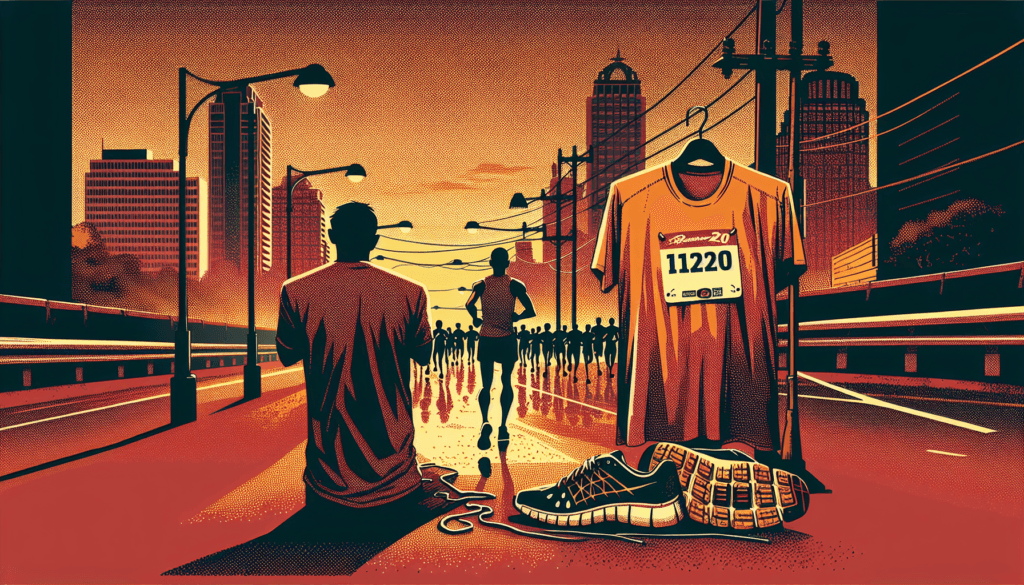
From casual 5Ks to full marathons, running has quietly become the defining hobby of a generation of Filipinos — and the trends on the ground back it up.
I didn’t start running because of a health scare. No doctor told me to move more, no breakup sent me spiraling toward the pavement, no dramatic before-and-after story is waiting at the end of this piece. I entered my running era in 2025 the way most Filipinos seem to: someone I knew posted a race bib on Instagram, it looked kind of fun, and three weeks later I was standing at the starting line of a 5K in Bonifacio Global City at five in the morning, wondering what I had gotten myself into.
What surprised me wasn’t the running itself. It was how many people I already knew were already there. My officemate who I thought only did yoga. My tito who I assumed just walked the mall for exercise. A college friend I hadn’t spoken to in two years, who apparently ran her first half-marathon in Cebu last November. Parang overnight, everyone had a GPS watch and an opinion about hydration vests.
This isn’t just a feeling. Running events across the Philippines have been selling out fast within hours of opening. Race organizers from Batangas to Baguio are reporting record registrations. So what’s actually driving this? I got curious and started asking around — and the picture that emerged is more layered than “Filipinos suddenly love cardio.”
Why Filipinos Are Running: The Real Motivations
Motivations for running aren’t one-size-fits-all, and that’s honestly what makes this trend interesting. Talk to ten runners and you’ll get ten different origin stories. But patterns do emerge. Community, mental health, and social media visibility consistently show up near the top when Filipino runners are asked why they started — and more importantly, why they stayed. Based on conversations with runners and observed patterns in local communities, here’s how these motivations tend to rank:
| Rank | Motivation | Who It Resonates With Most | Notes |
|---|---|---|---|
| 1 | Community and social connection | Young professionals, 25–40 | Running groups and clubs are a major entry point |
| 2 | Mental health and stress relief | Urban dwellers, post-pandemic cohort | Cited especially after 2020–2022 lockdowns |
| 3 | Physical fitness and weight management | First-time runners across all ages | Most common stated reason for starting |
| 4 | Social media visibility and identity | Gen Z and younger millennials | Race bibs, medals, and GPS maps drive posting |
| 5 | Accessible cost compared to gym memberships | Students, budget-conscious adults | Entry-level running requires minimal gear |
| 6 | Race events as travel motivation | Regional runners, hobby travelers | Destination races in Cebu, Baguio, Batangas |
| 7 | Health professional recommendation | 40 and above demographic | Doctors recommending low-impact cardio |
| 8 | Competitive drive and personal records | Experienced runners, returning athletes | PR culture is strong in local running communities |
Table: Why Filipinos Are Running — Motivations Ranked
What stands out here is that physical fitness — the reason most people say they run when asked at a party — actually ranks third. The honest answer, at least based on what I’ve observed and heard, is that running is as much a social act as a physical one. People want to belong to something. Running groups give you that, with the bonus of endorphins.
The Numbers Behind the Boom
It helps to look at what’s actually happening on the ground. Race registrations, running club memberships, and gear sales all tell a consistent story: this is not a flash-in-the-pan trend.
| Indicator | Observed Trend | Context |
|---|---|---|
| 5K and 10K race registrations | Selling out within hours of opening | Reported by multiple Metro Manila race organizers, 2024–2025 |
| Running club membership | Significant growth in Metro Manila, Cebu, Davao | Clubs like QCRC, BDM, and BGC-based groups report waitlists |
| Gear and footwear sales | Reported growth in the running shoe category | Local and international sports retailers, 2024 data |
| Social media running content | Among top fitness hashtags in PH | #RunPH and race-specific tags consistently trend post-event |
| Destination race participation | Growing regional attendance | Events in Baguio, Cebu, and Batangas attract out-of-town runners |
| Average race participant age | Broadening — now spans 18 to 60+ | No longer dominated by hardcore athletes |
Table: Philippine Running Scene — Key Indicators
The broadening age range is the detail I keep coming back to. Running used to feel like the domain of serious athletes or retirees doing doctor-prescribed walks. Now it genuinely spans generations, and that’s visible at any Sunday morning race.
What It Actually Costs to Start Running in the Philippines
One of the reasons running has exploded here specifically — and not, say, cycling or CrossFit — is the entry point. You can start running for almost nothing. But “almost nothing” has a ceiling, and once you’re in, the hobby has a way of expanding your budget alongside your mileage.
| Item | Budget Option (₱) | Mid-Range Option (₱) | Notes |
|---|---|---|---|
| Running shoes | 1,500–3,000 | 5,000–9,000 | Local brands vs. Nike, ASICS, Hoka |
| Running shorts/shirt | 300–800 | 1,500–3,000 | Moisture-wicking recommended |
| Race registration (5K) | 400–700 | 800–1,500 | Varies by organizer and inclusions |
| Race registration (10K) | 600–1,000 | 1,200–2,000 | Often includes finisher shirt |
| GPS running watch | Not required to start | 5,000–15,000+ | Entry-level Garmin or Xiaomi options available |
| Hydration gear | 200–500 (handheld bottle) | 1,500–3,500 (vest) | Needed for distances beyond 10K |
| Monthly running club fee | Free–500 | 500–1,500 | Many community groups are free or donation-based |
Table: Cost of Entry — Running in the Philippines
This is where I’ll be honest: I told myself I’d keep it simple. Tatlong buwan later, I had a GPS watch, two pairs of running shoes (one for roads, one “for trails” that I’ve used exactly once), and a finisher medal collection that has no business existing given that I’ve only done 5Ks. The hobby has a gravitational pull. Budget accordingly.
The Mental Health Angle Nobody’s Talking About Loudly Enough
Ask Filipino runners off the record why they really run and the mental health answer comes up constantly — but quietly. There’s still some hesitation around saying outright, “I run because it keeps me from feeling terrible.” Post-pandemic, that changed somewhat. The lockdowns broke something open in the national conversation about mental wellness, and running became one of the more socially acceptable ways to say you’re actively managing your inner life.
Research generally shows that running and other forms of aerobic exercise can help reduce symptoms of anxiety and depression, improve sleep, and create a sense of routine that many people lost during the pandemic years. For Filipinos specifically, the communal aspect amplifies this — running with a group adds accountability, friendship, and the particular Filipino comfort of not doing hard things alone.
I’m not a mental health professional and I’m not going to tell you running will fix anything serious. But I will say that the 5:30 AM crowd at a weekend fun run has a specific energy — tired, a little ridiculous, genuinely happy — that’s harder to find elsewhere.
So Why Is Everyone Running Right Now, Specifically?
Timing matters. The running boom didn’t happen in a vacuum. Several things converged around 2023–2025 to make this the moment: post-pandemic hunger for outdoor activity, a social media ecosystem that rewards visible self-improvement, the rise of running-adjacent content creators in the Philippines, and a generation of young professionals with disposable income and a deficit of third places — spaces that aren’t home or work where you can belong to something.
Running gave people a third place that also happened to be free, scalable, and Instagram-friendly. That’s a hard combination to beat.
What I didn’t expect when I started was how much of it would be about other people. The running itself is solitary — just you and the road and your breathing. But everything around it is deeply social. The group chats, the post-race silog breakfast, the gentle peer pressure to sign up for the next race. That’s the actual product. The fitness is almost incidental.
I’m still slow. I have no plans to run a marathon. I will probably continue signing up for 10Ks and pretending I might eventually do a 21K while actually just enjoying the early morning and the free banana at the finish line. That’s enough. And if you’ve been thinking about starting — the bar is genuinely low, the community is genuinely welcoming, and the bananas are genuinely good.
A BantayDailyPH Life & Perspective Article by Juno dela Cruz. Last updated: March 2026.